
Last updated November 15, 2026
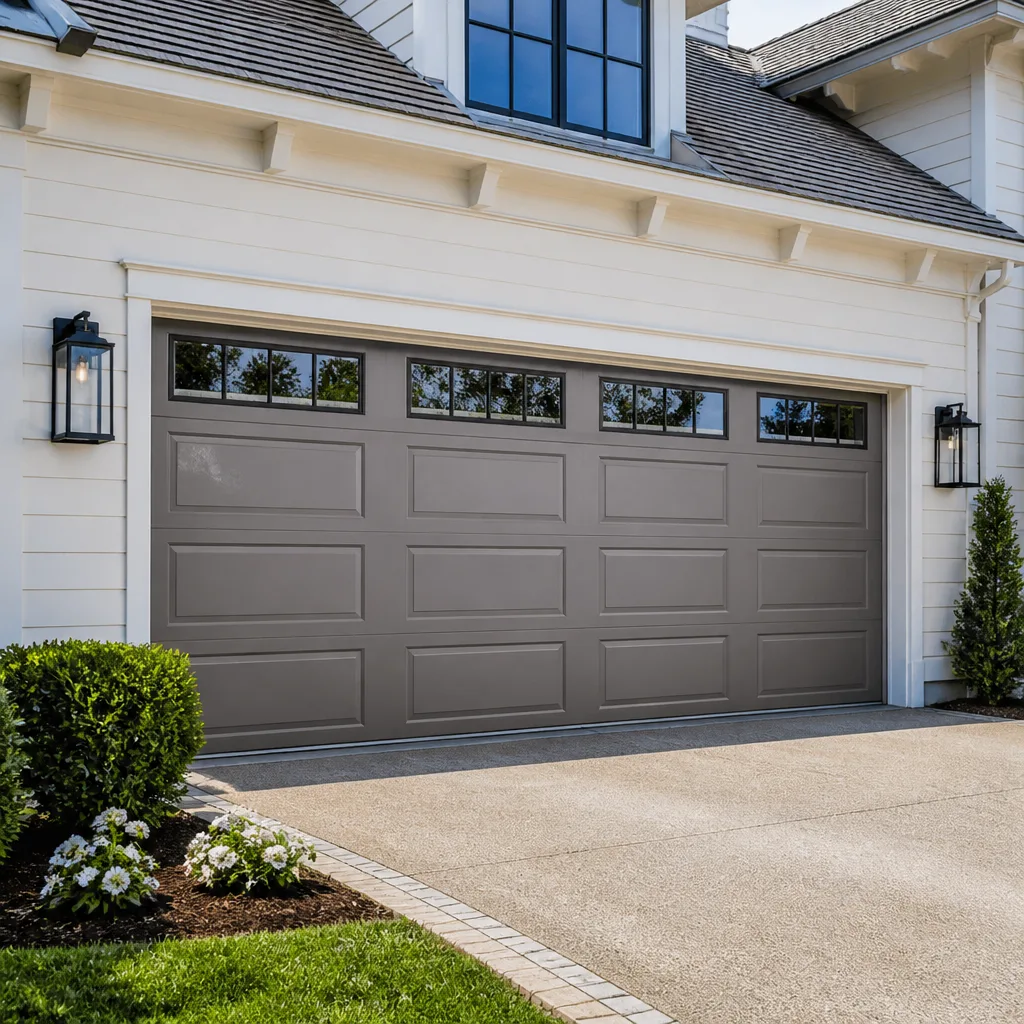 Raised-panel steel
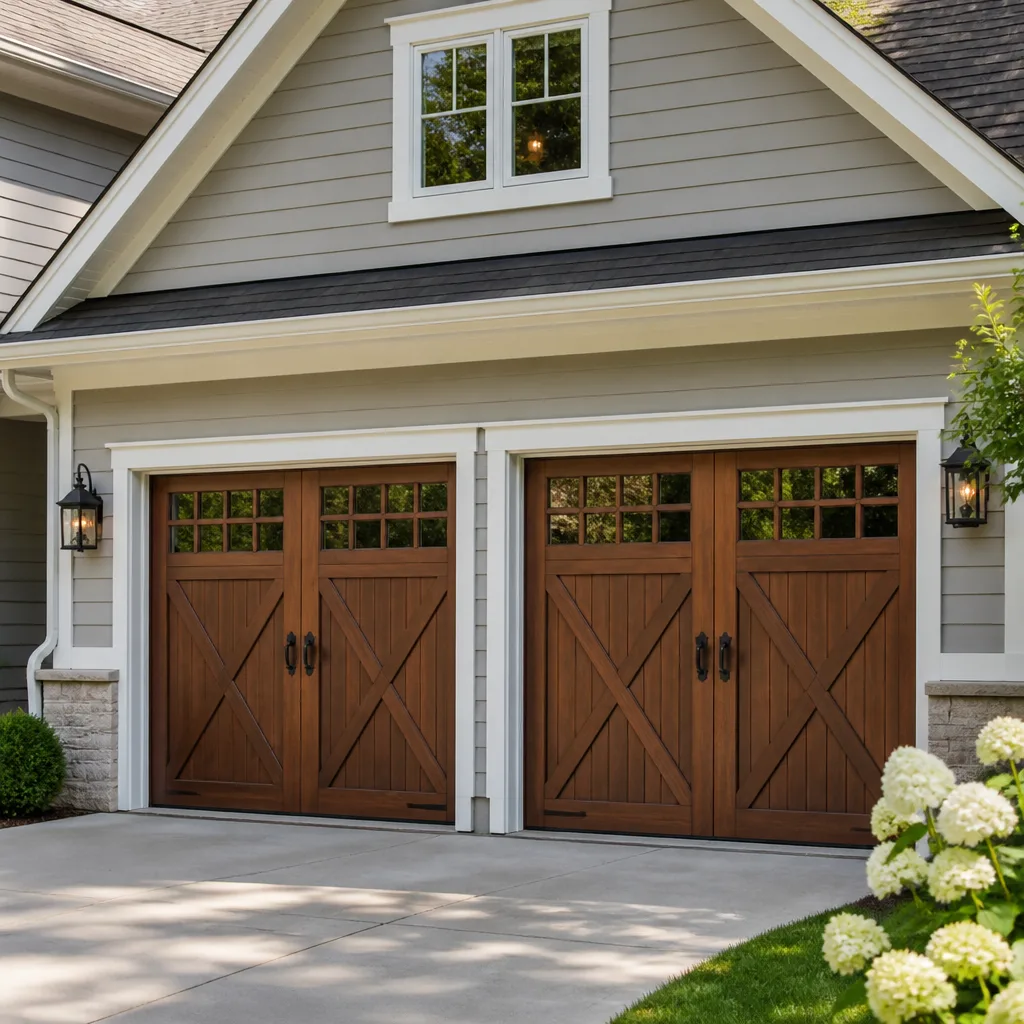 Carriage house
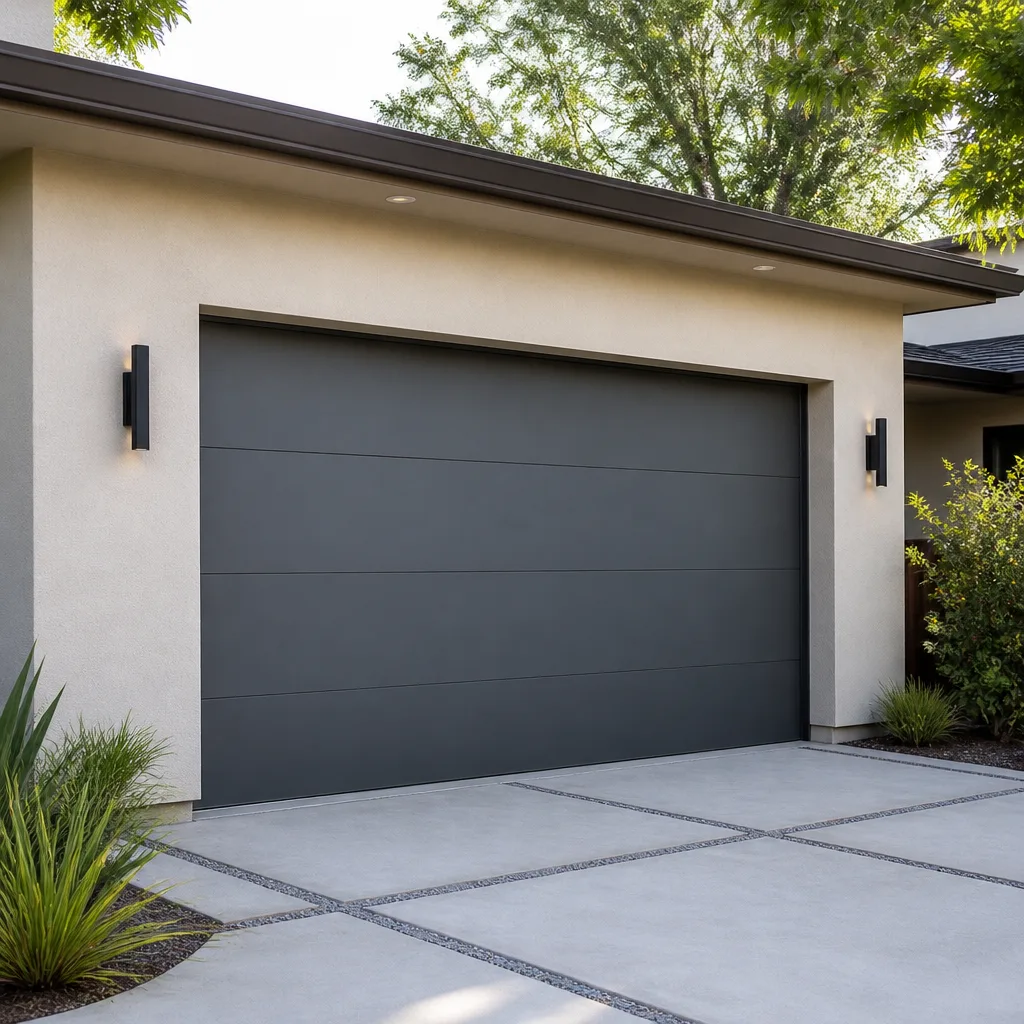 Modern flush
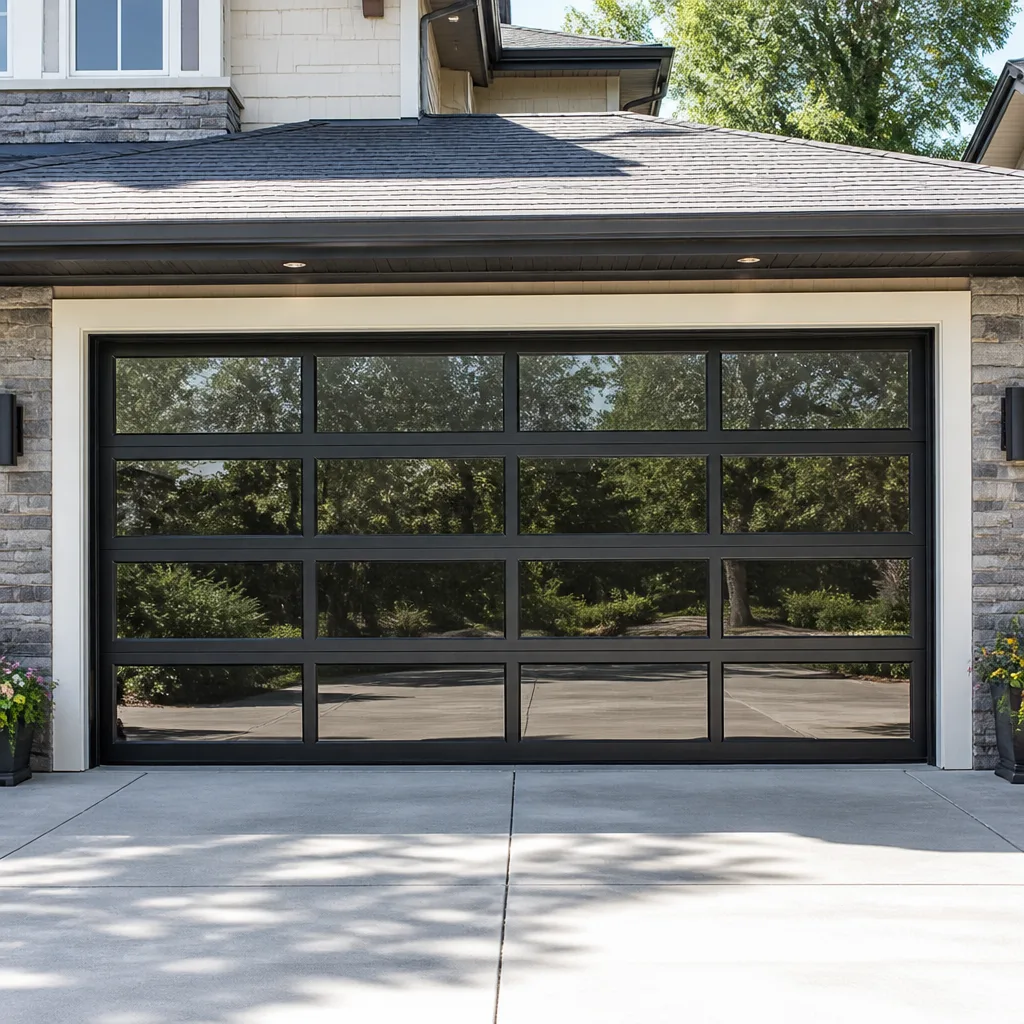 Full-view glass
 LiftMaster openers
 Chamberlain openers
Full 25-point door and opener safety check with every visit - springs, cables, rollers, tracks, and your LiftMaster or Chamberlain opener included
You get a price before we start. It does not change when the pro arrives.
Get your free estimateGarage Door Permits, Codes & Inspections in Chico, CA: What You Need to Know
Most Chico homeowners assume that swapping a garage door is a permit-free weekend project. It often isn’t. A door replaced without the permit it needed can sit quietly in your records for years, then surface during a home sale, a refinance, or an insurance claim, and suddenly a job you thought was finished becomes a problem you have to solve under pressure. Buyers and their agents ask harder questions when the market tightens, and an unpermitted improvement is exactly the kind of thing that stalls a closing. This guide walks through when the City of Chico actually requires a permit for garage door work, what California’s energy code has to do with your door, what a Chico building inspector looks at, and how to prepare so the inspection is a formality instead of a headache.
Quick Answer
In Chico, a like-for-like garage door replacement of the same size, same material, and same configuration usually does not trigger a building permit, but a change in door size, a new opening, structural work around the header, or a door in a designated high-fire zone often does. California’s Title 24 energy code also applies to garage doors on conditioned garages in new construction and major renovations. The only way to know for certain on your property is to confirm with the City of Chico building department before work starts, because permit thresholds depend on the scope of the job and the parcel’s zoning and fire designation.
Styles & brands we work with
- Raised-panel steel
- Carriage house
- Modern flush
- Full-view glass
- LiftMaster openers
- Chamberlain openers
Table of Contents
- When does a garage door replacement need a permit in Chico?
- What counts as a like-for-like swap?
- How does California’s Title 24 energy code affect your garage door?
- Wildland-Urban Interface fire zones in Butte County
- What a Chico building inspector actually checks
- How unpermitted work shows up on title and insurance
- How to prepare for your inspection
- Common mistakes to avoid
When does a garage door replacement need a permit in Chico?
A garage door replacement needs a building permit in Chico when the work goes beyond a straight swap of a door with an identical one. The city’s building department treats a garage door replacement as a structural alteration when you change the opening, modify the header, add reinforcement, or install a door that wasn’t part of the original design. Cosmetic changes, new paint, new weatherstripping, and a replacement door of the same dimensions generally fall outside permit territory. Our technicians have up to 11 years of experience, and the permit question comes up on nearly every installation, so we’ve learned to ask it before we order anything.
Here’s the practical breakdown of when a permit is typically required:
- Size change: Going from a single door to a double door, or widening an existing opening, changes the structural load on the header and almost always requires a permit.
- Header or framing modification: Any change to the framing above the opening, including reinforcing a sagging header, needs engineering and a permit.
- New opening: Cutting a new garage door opening into an existing wall is structural work, full stop.
- High-fire zones: A door in a designated Wildland-Urban Interface zone may need a permit even for a like-for-like swap if the replacement door must meet a specific fire rating.
- Major renovation: If the garage is being converted, conditioned, or rebuilt as part of a larger project, the door is part of that scope and the permit covers it.
Like-for-like swaps of the same size and configuration are usually exempt, but “usually” is doing a lot of work in that sentence. The city’s building department is the only authority that can confirm your specific job. A quick call before you order a door costs nothing and saves you the risk of discovering a problem at closing.
What counts as a like-for-like swap?
A like-for-like swap is a replacement where the new door matches the old one in size, configuration, material type, and mounting method, with no changes to the opening or the framing. In Chico, this is the most common garage door job we see: an older door wearing out and a homeowner wanting a modern replacement of the same footprint. When the dimensions match and nothing structural moves, the job typically doesn’t need a building permit.
The tricky part is that “same size” isn’t always obvious. A door that looks identical on the outside may have a different track configuration, a different spring setup, or a different headroom requirement that changes the installation. If the new door requires new tracks, a different torsion system, or any change to how it anchors to the wall, the job is no longer a pure swap.
What a like-for-like swap looks like in practice:
- Measure the existing opening and the existing door to confirm they match the replacement.
- Confirm the material and insulation value of the replacement is comparable or better.
- Check that the mounting points and track layout stay the same.
- Verify there’s no change to the header, framing, or opening dimensions.
- Install the new door and confirm balance, travel, and safety reverse operation.
Wayne Dalton and Raynor both make doors that drop into existing openings without modification, which is one reason we recommend confirming brand and model compatibility before you commit. If the door you want requires changes to the opening, treat the job as a permitted one until the city tells you otherwise. When we handle garage door repair or installation, we flag permit questions at the estimate stage, not after the door is on order.
How does California’s Title 24 energy code affect your garage door?
California’s Title 24 energy code applies to garage doors on conditioned garages in new construction and major renovations. A conditioned garage is one that’s heated, cooled, or otherwise connected to the home’s HVAC system and inside the building’s thermal envelope. If your garage is finished, insulated, and used as living space or a workshop, the door separating it from the outside is treated as part of the envelope, and the door’s insulation value matters to the code.
This matters most in two scenarios:
- New construction: A newly built home with a conditioned garage has to meet Title 24 envelope requirements, and the garage door is part of the envelope.
- Major renovation: A renovation that conditions a previously unconditioned garage, or that substantially remodels the thermal envelope, brings the garage door into scope.
For a straightforward replacement on an unconditioned garage, Title 24 usually isn’t the governing code, but it’s still worth asking the building department whether your scope triggers it. In our experience, the answer depends on what’s happening around the door, not just the door itself. If you’re installing a new insulated door as part of a larger remodel, the contractor running the project should confirm the envelope requirements with the city before the door is ordered.
Clopay and Amarr both publish insulation values for their door lines, and those numbers matter when Title 24 is in play. When Chico homeowners call us for garage door opener repair alongside a door replacement, we ask about the garage condition early, because it changes which door lines make sense.
Wildland-Urban Interface fire zones in Butte County
Homes in designated Wildland-Urban Interface (WUI) zones in and around Chico may need a fire-rated garage door under certain conditions, and this is a Butte County-specific issue that doesn’t come up in most of the state the same way. WUI designations are set by fire hazard severity mapping, and a parcel in a high-fire zone can carry building requirements that a parcel a few blocks away does not. The garage door is one of the openings the code looks at, because an attached garage is a path for fire to enter the home.
What that means in practice:
- Check your parcel’s designation: The City of Chico building department and the local fire authority can tell you whether your address sits in a WUI zone and what fire rating applies.
- Replacement may need to match: If the original door was fire-rated to meet a requirement, a like-for-like swap may need to preserve that rating, which can pull the job into permit territory.
- Upgrade is often the safer path: If you’re replacing a door anyway and your parcel is in a high-fire zone, a fire-rated door is worth asking about even when it isn’t strictly required.
- Insurance may care: Some carriers ask about fire-rated openings in WUI zones, so the answer can affect more than the permit.
We don’t guess at WUI designations. The city and the fire authority are the sources, and a homeowner in a high-fire zone should confirm the requirement before ordering a door. It’s one of the few places in this trade where the code question genuinely changes what door you buy.
What a Chico building inspector actually checks
A Chico building inspector checks the structural elements of the garage door installation: the header, the framing, the mounting of the tracks, and the connection of the door to the structure. The inspector isn’t there to grade your door’s appearance or test your opener’s remote. They’re confirming that what was installed matches what was permitted and that the structure around it is sound.
Here’s what a garage door inspection typically covers:
- Permit and plans: The inspector confirms the permit matches the work and, where plans were required, that the installed door matches the approved drawings.
- Header and framing: The structural member above the opening is checked for size, condition, and proper connection to the surrounding framing.
- Track mounting: The tracks and their anchors are checked for secure attachment to the framing and the floor.
- Opening dimensions: The finished opening is measured against the permitted dimensions to confirm nothing changed.
- Fire rating (where applicable): In a WUI zone, the inspector confirms the door’s fire rating matches the requirement.
- Final operation check: The door is checked for balance and travel, and the safety reverse is confirmed to be functioning.
In our experience, most failed inspections come down to small mismatches: a door that doesn’t match the plan, a track anchored into something that isn’t structural, or a missing fire rating document. None of those are hard to avoid, and all of them are easier to catch before the inspector arrives.
How unpermitted work shows up on title and insurance
Unpermitted garage door work shows up on title records when a buyer’s title search or a permit history check reveals a gap between the work that was done and what the city has on file. Title companies pull permit history as part of a sale, and an inspector working for the buyer will note improvements that don’t have a corresponding permit. At that point the problem becomes a negotiation issue, and the seller is often the one paying to make it right.
The insurance side is less obvious but just as real. A claim for damage involving an unpermitted improvement can invite questions about whether the work was done to code, and a carrier may limit coverage or ask for documentation the homeowner doesn’t have. This doesn’t happen on every claim, but it’s the kind of thing that’s much cheaper to prevent than to fix.
How unpermitted work typically surfaces:
- During a sale: A buyer’s inspector flags the door, the seller’s agent asks for the permit, and the answer is “there isn’t one.”
- During a refinance: An appraiser notes the improvement, and the lender asks for documentation.
- During a claim: An adjuster asks how the door was installed and whether it was permitted.
- During a future permit: A later remodel pulls the old work into the review, and the city asks about the door.
For homes in Chico, this is a real concern because the market for older properties often includes decades of homeowner improvements, some permitted and some not. If you’re buying a home in Chico and the garage door looks newer than the house, it’s worth asking for the permit history. When we quote a Garage Door Repair Chico installation, we tell homeowners exactly which permits the job will need so there are no surprises later.
How to prepare for your inspection
Preparing for a garage door inspection in Chico is mostly about documentation and access. The inspector needs to see the work, compare it to the permit, and confirm the structure is sound. If you’ve got the paperwork ready and the garage is clear, the visit is usually quick.
A checklist before the inspector arrives:
- Have the permit and approved plans on site. If plans were required, they should be printed and available.
- Clear the garage and the driveway. The inspector needs to see both sides of the door and the full track.
- Confirm the door matches the permit. Model, size, and fire rating should match what was approved.
- Have the fire rating documentation ready if you’re in a WUI zone.
- Test the door yourself first. Confirm balance, travel, and safety reverse before the inspector does.
- Have the installer’s contact information available in case the inspector has a question about the installation.
- Walk the perimeter. Check that tracks are anchored cleanly and nothing is loose or missing.
We recommend walking through this list a day before the inspection, not an hour before. If something doesn’t match, you want time to call the installer and get it corrected. The Chico building department can also tell you what to expect on the day, and most will answer a quick question about documents if you call ahead.
How to choose an installer who handles permits
An installer who handles permits talks about them before you sign the estimate. That’s the simplest test. A company that treats the permit question as part of the job will ask about your parcel’s fire designation, confirm the door’s dimensions against your opening, and tell you upfront which permits the scope requires. A company that skips those questions is either inexperienced with Chico’s process or planning to leave the paperwork to you.
What to ask:
- Which permits will this job require, and who pulls them?
- Is my parcel in a designated WUI zone, and does the door need a fire rating?
- Does my garage count as conditioned, and does Title 24 apply to this replacement?
- Does the door match the opening exactly, or is anything structural changing?
- What documentation will I have when the job is done?
We’re fluent across eight major brands, including LiftMaster, Chamberlain, Genie, Clopay, Amarr, Wayne Dalton, Craftsman, and Raynor, and brand fluency matters here because a door that matches your opening with no structural change is often the difference between a permit-free swap and a permitted job. We’d rather steer you toward a door that fits your opening cleanly than sell you one that triggers a permit you didn’t budget for.
How much does garage door work cost in Chico?
Garage door work in Chico is priced per job by a written estimate, and the final price is set by that estimate, not by a range. Permit costs are separate from the door and installation cost, and they’re paid to the city, not to the installer. The written estimate should spell out what’s included and what the city fees will be if any permits are required.
What affects the total:
- Whether a permit is required: A permitted job includes additional paperwork and inspection steps.
- Door size and material: A double door costs more than a single, and insulated doors cost more than uninsulated.
- Brand and product line: Builder-grade doors and premium lines from brands like Clopay and Amarr sit at different price points.
- Structural work: Any header or framing work adds cost and engineering.
- Opener work: A new door often pairs with opener adjustments or replacement.
Pricing in Chico is set per job by a written estimate, and we quote it before any work starts. The price is quoted and agreed before a technician touches the door, and the written estimate is the price you pay. Call (833) 946-9124 for a free estimate on your job.
See the difference
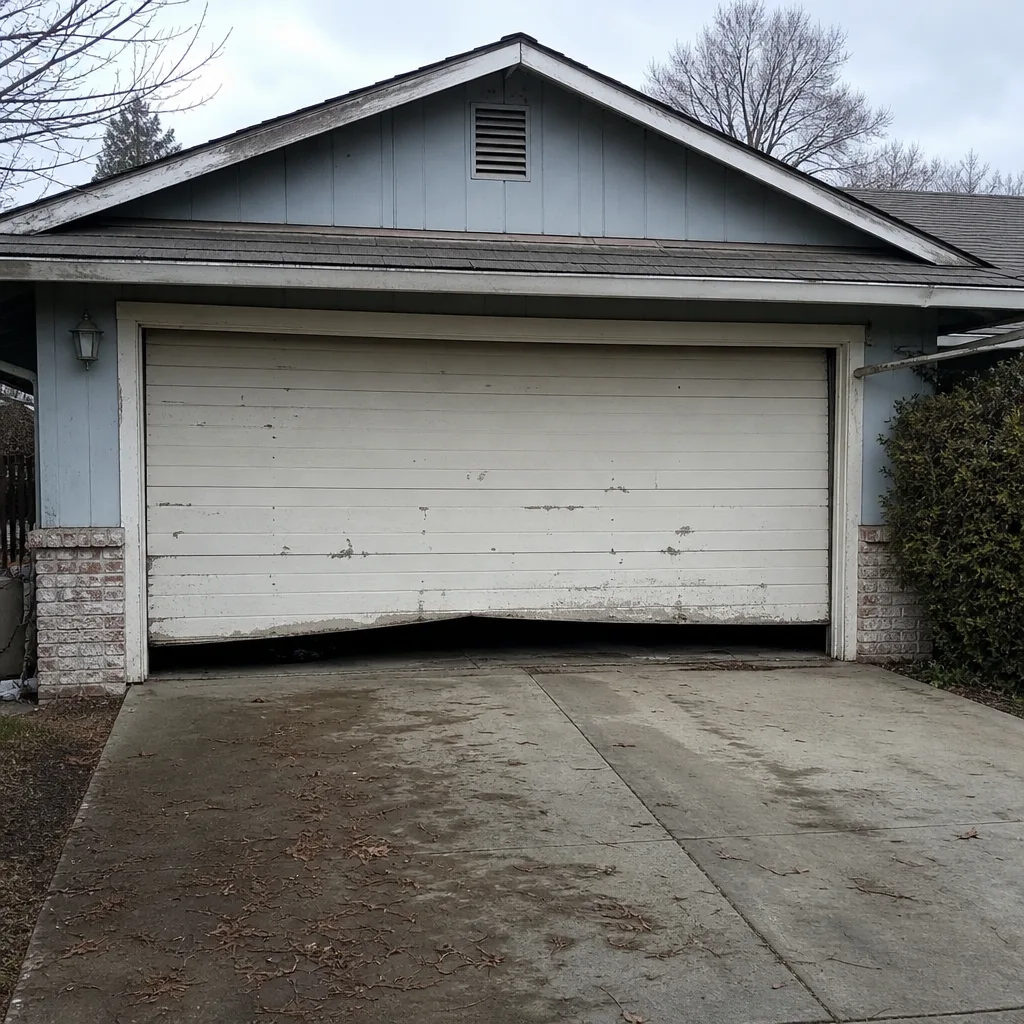 Before
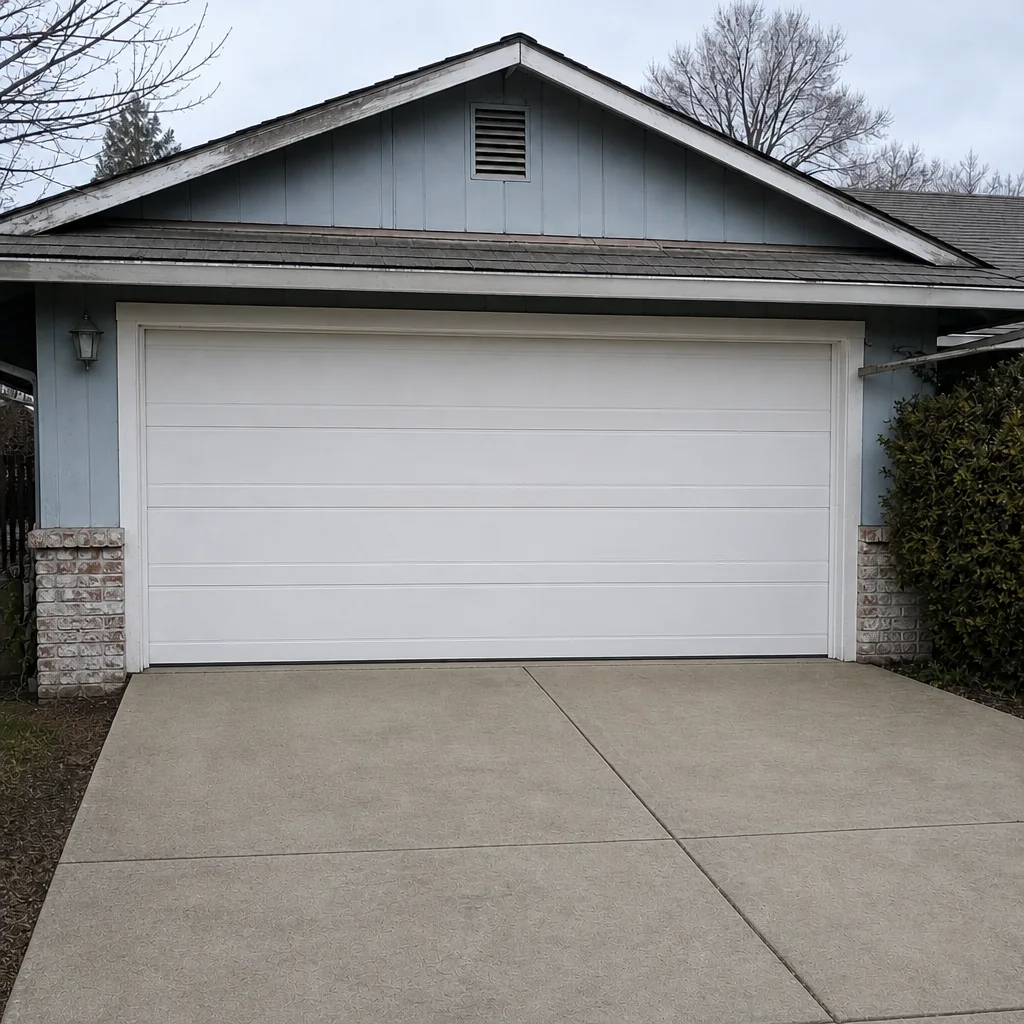 After
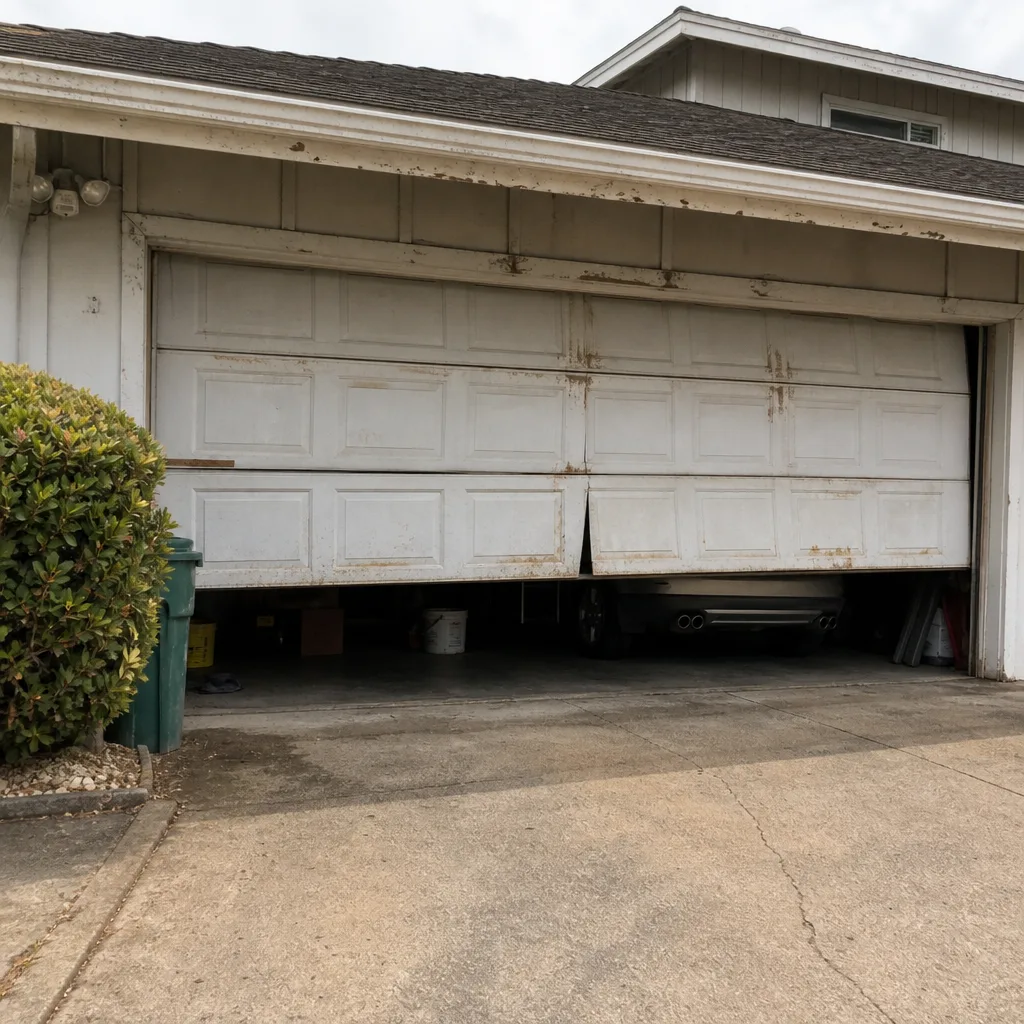 Before
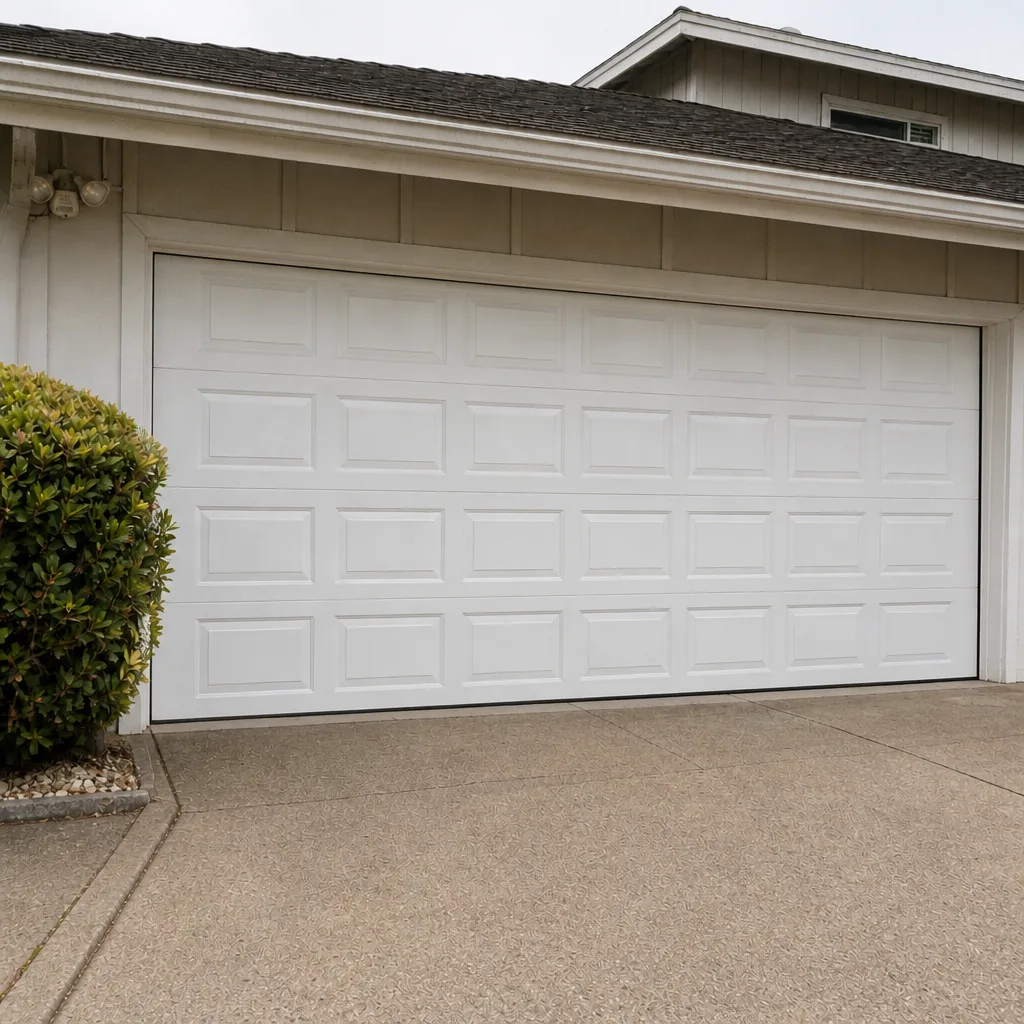 After
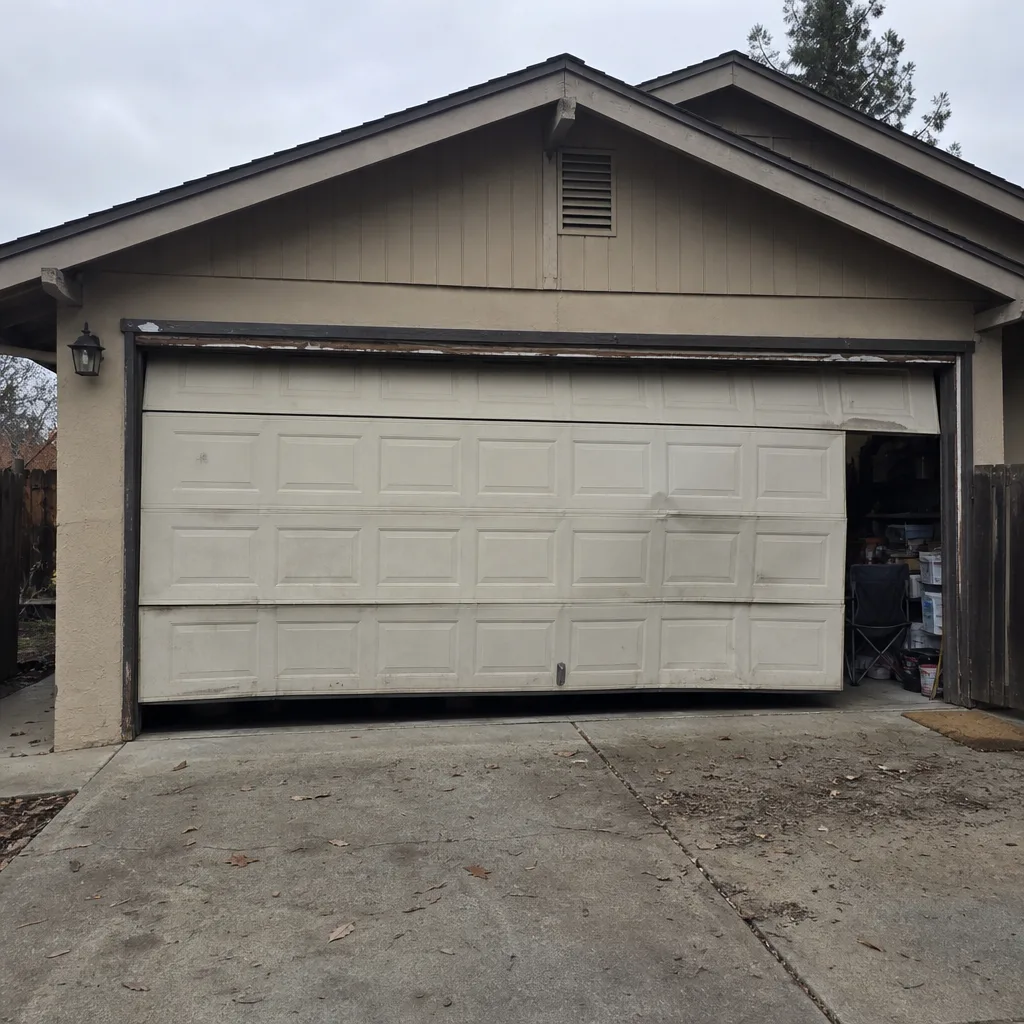 Before
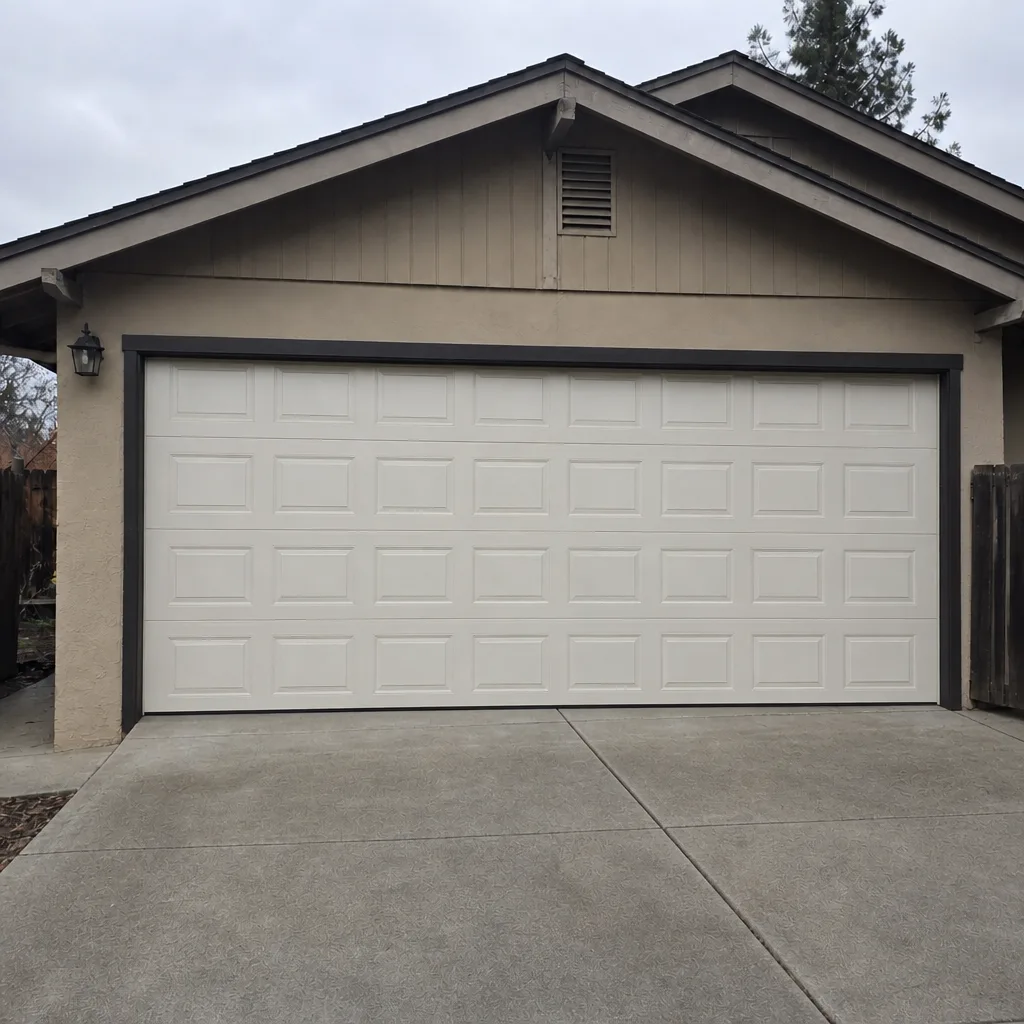 After
Common Mistakes to Avoid
- Assuming all replacements are permit-free. Like-for-like swaps usually are, but any change in size, framing, or fire rating can pull the job into permit territory. Confirm with the city before ordering a door.
- Skipping the WUI check. A high-fire parcel in the Chico area can require a fire-rated door even for a straight replacement, and that requirement doesn’t show up unless you ask about your parcel’s designation.
- Not asking whether the garage is conditioned. Title 24 applies to conditioned garages in new construction and major renovations, and the insulation value of your replacement door matters if it does.
- Letting an installer handle permits without documentation. The paper trail matters as much as the permit itself. Keep the approved plans, the permit, and the final inspection sign-off together.
- Ignoring the opener during a door replacement. A heavier or differently balanced door can strain an older opener, and lifting a door with a mismatched spring and opener setup is a safety issue, not just a performance one.
- Doing spring work yourself. Garage door springs and cables are under high tension and can cause serious injury. That’s not a permit question, it’s a safety one. Leave springs and cables to a trained professional.
- Assuming the buyer won’t check. Title searches pull permit history, and an unpermitted improvement is exactly the kind of thing a buyer’s agent will ask about during a sale in Chico.
When to Call a Professional
Call a professional when a permit is involved, when anything structural is changing, or when the door has a problem you can’t safely diagnose. Springs, cables, and torsion systems are under high tension and can cause serious injury, so those jobs belong to a trained technician, not a homeowner with a ladder. A door that’s off its track, an opener that won’t reverse, and a garage that’s become hard to open all point to the same answer: get it looked at before someone gets hurt or the door gets damaged further.
Garage Door Repair Chico offers free estimates in Chico, and we’ll confirm the permit scope on the estimate so nothing surprises you later. Call (833) 946-9124. We answer 24/7. Fast dispatch from 7am to 7pm, Sunday through Friday.
Frequently Asked Questions
It depends on the scope. A like-for-like swap of the same size, material, and configuration usually doesn’t require a building permit, but a change in size, a new opening, structural work, or a replacement in a designated high-fire zone often does. Confirm with the City of Chico building department before ordering, and have the installer confirm the scope on the estimate. Call (833) 946-9124 for a free estimate that spells out the permit question.
A WUI zone is a designated high-fire-hazard area, and homes inside one can carry building requirements that homes outside it don’t. For a garage door, that can mean a fire-rated door is required or must be preserved on replacement. The City of Chico building department and the local fire authority can tell you your parcel’s designation. Call (833) 946-9124 and we’ll walk through what the requirement means for your replacement.
It checks the permit against the work, the header and framing, the track mounting, the opening dimensions, any required fire rating, and the door’s balance and safety reverse. The inspector isn’t grading the door’s appearance. They’re confirming the structure is sound and the install matches what was permitted. If something doesn’t match, it’s usually a quick fix, but it’s easier to catch before the visit. Call (833) 946-9124 for a free estimate.
Yes. A buyer’s title search pulls permit history, and an inspector will note improvements without a corresponding permit, which can become a negotiation issue at closing. Insurance claims involving unpermitted work can also invite questions about whether the work was done to code. The fix is prevention: confirm the permit before the job, and keep the documentation. Call (833) 946-9124 for a free estimate.
Title 24 applies to garage doors on conditioned garages in new construction and major renovations. A conditioned garage is one that’s heated, cooled, or connected to the home’s HVAC and inside the thermal envelope. A straightforward replacement on an unconditioned garage usually isn’t governed by it, but the scope of your job is the deciding factor. Ask the City of Chico building department to confirm for your property.
We answer 24/7 and dispatch fast from 7am to 7pm, Sunday through Friday, so same-day service is often possible for repair calls. A call outside dispatch hours is booked into the next opening, Sunday through Friday, 7am to 7pm. We’re closed on Saturday. Call (833) 946-9124 for a free estimate. The price is quoted and agreed before any work starts, and the written estimate is the price.
It can be, depending on your parcel’s WUI designation and the fire hazard severity for your address. Not every Chico home is in a designated zone, and the requirement varies by parcel. The city and the fire authority are the sources for your specific address, and we confirm the rating on the estimate when a door replacement is in scope. Call (833) 946-9124 for a free estimate.
The Bottom Line
The permit question on a garage door in Chico comes down to scope: a like-for-like swap usually doesn’t need one, and anything that changes the opening, the framing, or the fire rating usually does. Title 24 applies to conditioned garages in new construction and major renovations, and a WUI designation can add a fire-rated door requirement that doesn’t show up until you ask. The Chico building department is the source for your specific parcel, and the paperwork you keep is what protects a sale or a claim years later. Springs and cables are a safety matter, so leave those to a trained technician. Call (833) 946-9124 for a free estimate. We answer 24/7. Fast dispatch from 7am to 7pm, Sunday through Friday.
Written by the team at Garage Door Repair Chico.